What is the best exercise?
On this page
The one you’ll keep doing, plus some lifting. No single exercise covers everything, and in a review of 16 studies, people who did both aerobic exercise and muscle strengthening had 40% lower risk of death than people who did neither. Brisk walking most days and lifting twice a week is the simplest way to get both.
Search for the best exercise and you’ll get a new winner every week: swimming, running, zone 2, HIIT, Pilates, rucking. Cardio people and lifting people argue about which side is right. Both leave something out, because the US guideline has two halves, a cardio half and a strength half, and only about 1 in 4 American adults does both (26.4% in 2024).
What we’d do
Pick a cardio you’d still do on a bad day. For most people that’s a brisk walk. Add two strength sessions a week that work every big muscle, at home or in a gym. Then add whatever you enjoy, a sport, a class or a bike ride, since you’ll keep doing the thing you look forward to.
Asking for the best exercise is like asking for the best food. Nobody lives on one food, and nobody gets every benefit from one kind of exercise.
What each kind does best
| Kind | What it does best | Examples |
|---|---|---|
| Brisk cardio | Covers the cardio half of the guideline | Walking, cycling, swimming |
| Hard cardio | Raises fitness fastest, and counts double | Running, intervals, fast stairs |
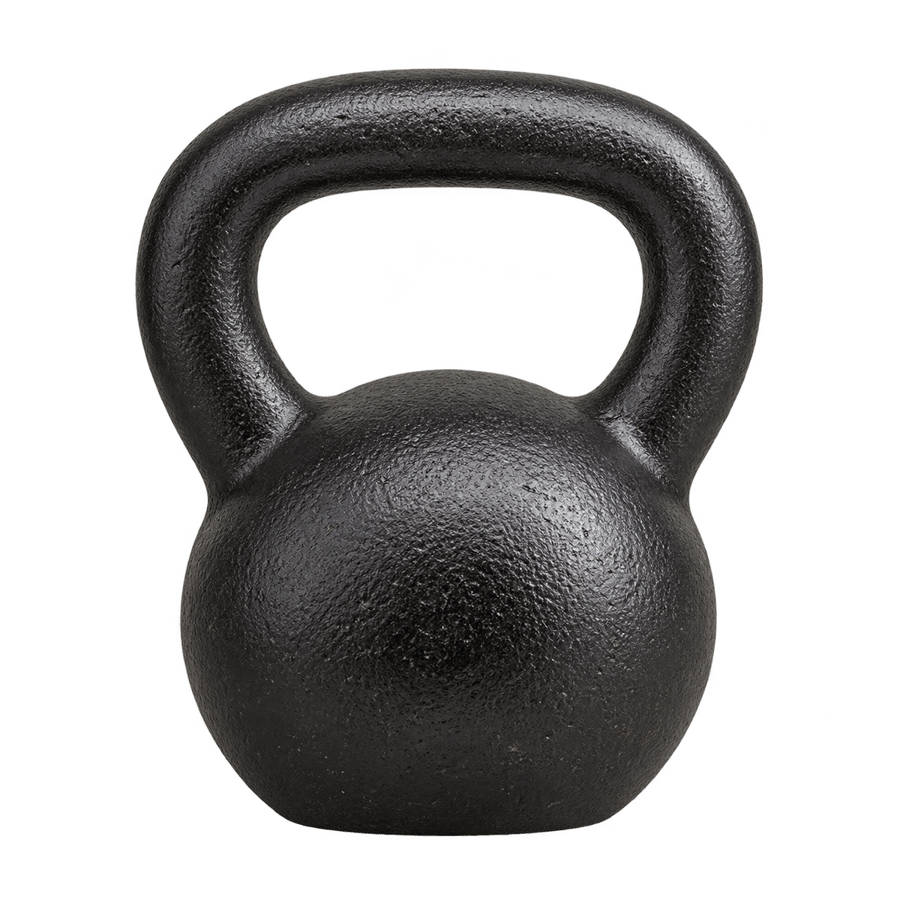
| Lifting | Keeps strength, which fades with age 2 to 5 times faster than muscle | Weights, bands, push-ups |
| Balance | Fewer falls after 60, 23% fewer in 108 trials | Heel-to-toe walking, one-foot holds |
Both halves in one grid
In a 2026 Harvard study, researchers followed 147,374 US health professionals for up to 30 years and lined up aerobic exercise against lifting. Here it is in brisk walking minutes, against people who did neither:
| Brisk walking a week | No lifting | 1 to 59 min | 60 to 119 min | 120+ min |
|---|---|---|---|---|
| Under 150 minutes | The comparison | 7% lower | 11% lower | 3% lower |
| 150 to 300 minutes | 26% lower | 27% lower | 30% lower | 31% lower |
| 300 to 600 minutes | 32% lower | 38% lower | 44% lower | 39% lower |
| 600 to 900 minutes | 37% lower | 41% lower | 45% lower | 47% lower |
| 900 or more | 43% lower | 47% lower | 43% lower | 42% lower |
Walking 150 to 300 minutes a week with no lifting went with 26% lower risk of death. With 60 to 119 minutes of lifting on top, it was 30%, and at 300 to 600 walking minutes with the same lifting, 44%. These are people who chose their exercise, so the grid shows what went with a longer life, and it can’t promise the same to any one person.
What about lifting on its own?
A 2022 review of 16 cohort studies found that people who did any muscle strengthening had 15% lower risk of death than people who did none, with the lowest risk at about 40 minutes a week. The same review found the 40% drop for people who did both kinds. strength.guide has the lifting dose and a program.
The best exercise for your mood
For depression, the answer is surprisingly specific. In 218 trials of people with major depression, walking or jogging, yoga and strength training eased symptoms the most, and harder sessions helped more than easy ones. People stuck with yoga and lifting best. More in does exercise help depression?
To see which half your week is missing, put it into Your week. It shows your cell in the grid above and the one change that adds the most.
6 sources
- Momma H and others, Muscle-strengthening activities are associated with lower risk and mortality in major non-communicable diseases, British Journal of Sports Medicine, 2022europepmc.org
- Zhang Y and others, Long-term resistance training with all-cause and cause-specific mortality, British Journal of Sports Medicine, 2026pmc.ncbi.nlm.nih.gov
- Healthy People 2030, PA-05, adults who do enough aerobic and muscle-strengthening activityodphp.health.gov
- Noetel M and others, Effect of exercise for depression: systematic review and network meta-analysis of randomised controlled trials, BMJ, 2024europepmc.org
- Mitchell WK and others, Sarcopenia, dynapenia, and the impact of advancing age on human skeletal muscle size and strength, Frontiers in Physiology, 2012europepmc.org
- Sherrington C and others, Exercise for preventing falls in older people living in the community, Cochrane Database of Systematic Reviews, 2019europepmc.org