What counts as vigorous exercise?
On this page
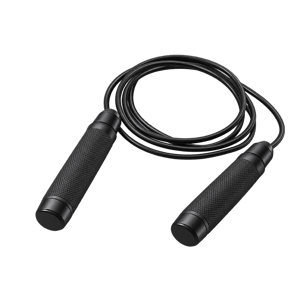
Anything hard enough that you can’t say more than a few words without pausing for a breath. Running, swimming laps, singles tennis, jumping rope and cycling faster than 10 mph all count. Every vigorous minute counts as two toward the 150, so 75 hard minutes a week meets the US minimum on its own.
Vigorous sounds like an all-out sprint, so people who jog think they’re only doing moderate exercise, and people who are new to it think hard minutes aren’t for them. Others count a hard minute the same as an easy one and sell their running short. Vigorous starts lower than most people think, at the point where talking gets hard, and the US guideline counts every one of those minutes twice.
What we’d do
If your week is short on time, swap some brisk minutes for hard ones. Three 25-minute runs cover the whole cardio half. If you’re starting from nothing, build up to hard minutes in short pieces, like the 3 fast minutes in an interval walk, before you try 25 minutes straight. Keep two strength sessions in the week either way.
Why does a hard minute count as two?
CDC puts moderate activity at 3 to 5.9 METs, which means 3 to nearly 6 times what you burn sitting still, and vigorous at 6 or more. A vigorous minute does about twice the work of a moderate one, so the 2018 US guideline sets 75 vigorous minutes equal to 150 moderate ones, or any mix of the two. It’s like paying with twenties instead of tens. You hand over fewer bills for the same total.
What’s on CDC’s vigorous list?
- Jogging or running
- Swimming laps
- Cycling faster than 10 mph
- Singles tennis
- Jumping rope
- Vigorous dancing
- Heavy yard work, like digging or shoveling
- Classes like step aerobics or kickboxing
For walking, a step count is less reliable at the hard end. In a 2019 treadmill study of 76 adults aged 21 to 40, 130 steps a minute marked vigorous effort only 70.7% of the time, so trust the talk test instead.
What did hard minutes do in the studies?
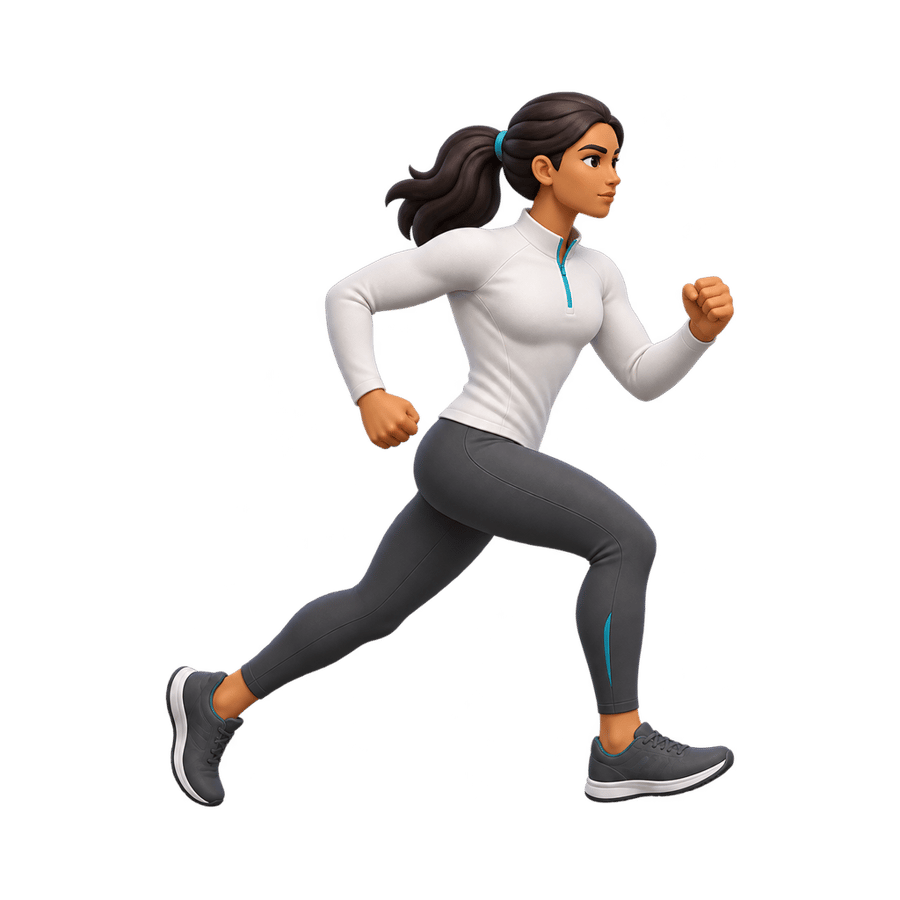
In 116,221 US health professionals followed for 30 years, people who met the vigorous guideline, 75 to 149 minutes a week, had 19% lower risk of death than people who did no vigorous activity, and 31% lower risk of dying of heart disease. Past 300 vigorous minutes a week, death rates didn’t clearly fall any further, and they didn’t rise either. Like every study of this kind, it followed people who chose their exercise.
Hard minutes also raise fitness faster. In a 2007 Norwegian trial, 40 moderately trained young men who ran four 4-minute intervals, three times a week, raised their VO2 max by about 7% in 8 weeks. vo2max.guide has the zones, the 4x4 and how to train it.
How many calories does running burn?
A mile run burns more than a mile walked, about half again as much once you take away what you’d burn sitting. tdee.guide’s page on calories in a mile walked or run has them for your weight. If you track calories with a watch, read how far off your watch can be first.
Who should check first?
The American College of Sports Medicine screens people on three things: how active you are now, whether you have symptoms or known heart, metabolic or kidney disease, and how hard you plan to go. If you have a heart condition, kidney disease or diabetes, ask your doctor before hard efforts. Chest pain, dizziness or fainting with effort means stopping and getting checked first, as in what to do if you get chest pain while exercising.
6 sources
- Centers for Disease Control and Prevention, Measuring physical activity intensitycdc.gov
- US Department of Health and Human Services, Physical Activity Guidelines for Americans, 2nd edition, executive summary, 2018odphp.health.gov
- Lee DH and others, Long-term leisure-time physical activity intensity and all-cause and cause-specific mortality: a prospective cohort of US adults, Circulation, 2022europepmc.org
- Tudor-Locke C and others, Walking cadence (steps/min) and intensity in 21 to 40 year olds: CADENCE-adults, International Journal of Behavioral Nutrition and Physical Activity, 2019europepmc.org
- Helgerud J and others, Aerobic high-intensity intervals improve VO2max more than moderate training, Medicine and Science in Sports and Exercise, 2007europepmc.org
- Riebe D and others, Updating ACSM's recommendations for exercise preparticipation health screening, Medicine and Science in Sports and Exercise, 2015europepmc.org