How do you use a rowing machine?
On this page
Push with your legs first, then swing your body back, then pull the handle in with your arms. On the way back in, do the same in reverse: arms out, body forward, then bend your knees. Start easy, with 5 pieces of 3 minutes and a minute’s rest between, and build from there.
Most people get on a rowing machine and do it backwards. They grab the handle, yank it to their chest with their arms and back, and let their legs flop along afterward. It feels like hard work, because it is, but the work is in the wrong place. The stroke is built around a push from your legs. Once the order is right, the machine gets smoother, harder and a lot less tiring on your arms.
What we’d do
Learn the order before you pull hard: legs, body, arms, then arms, body, legs. Spend your first few sessions rowing easy, at a pace where you could talk in sentences. When the stroke feels smooth, row 20 minutes steady two or three times a week, and make one session harder with short faster pieces. Count rowing as cardio, and keep lifting on two days.
If you remember three things
- Legs, body, arms. The drive starts with a push from your legs, and your arms finish it. The recovery is the same in reverse.
- Easy rowing is brisk, and it gets hard fast. Under 100 watts it’s 5 METs. At 100 to 149 watts it’s 7.5, where every minute counts as two.
- Technique first, power later. Concept2’s own coaching warns against pulling hard before the basics feel comfortable.
What’s the right order?
Concept2, a maker of rowing machines, breaks the stroke into four parts.
The catch. You start at the front, arms straight, leaning forward a little from the hips, with your shins vertical.
The drive. This is the work, in this order:
- Legs push. Press through your feet. Your arms stay straight while the legs do the big push.
- Body swings back. As your legs straighten, your back swings through upright to a slight lean back.
- Arms pull. Last, your arms draw the handle in, in a straight line, to just below your ribs.
The finish. Legs long, leaning back slightly with your core holding you, the handle held lightly below your ribs, shoulders low and relaxed.
The recovery. The drive in reverse, so you arrive back at the catch ready to push again:
- Arms reach out. Straighten your arms first.
- Body leans forward. Tip forward from the hips.
- Knees bend and you slide up. Only once your hands are past your knees, bend them and let the seat roll forward.
What are the usual mistakes?
Concept2 flags a handful. Pulling hard before the basics are comfortable is the first one. Hunching your shoulders up at the catch is another, when they should be level and low. Sliding so far forward that your shins tip past vertical is a third. And at the finish, keep your wrists flat and your grip loose, since a tight, bent wrist just tires your forearms.
A good check is to row a few strokes with your arms straight the whole time. If the handle still moves well, your legs are doing their job.
How hard is rowing?
It’s as hard as you make it. The Compendium of Physical Activities measures effort in METs, the energy of an activity against sitting still, and for rowing machines it goes by watts, the power number on the screen if your machine has one.
- Under 100 watts Brisk
- 100 to 149 watts Hard
- 150 to 199 watts Hard
- 200 watts or more Hard
METs: the energy of the activity against sitting still. CDC counts 3 to 5.9 as moderate and 6 or more as vigorous. Values from the 2024 Compendium of Physical Activities, measured in adults 19 to 59.
Under 100 watts, rowing is 5 METs, comfortably in the brisk band, so every minute counts toward your 150 a week. At 100 to 149 watts it’s 7.5, past the CDC’s line of 6 METs for vigorous effort, so each minute counts as two. At 150 to 199 watts it’s 11. If your machine doesn’t show watts, use the talk test: if you can talk but not sing, you’re at moderate, and if you can only get out a few words, you’re at hard.
5 x 3
minutes of easy rowing with 1 minute rests, our first session
What should a first session look like?
Here’s our pacing, not a trial protocol. Row 3 minutes easy, rest 1 minute, and do that 5 times. Use the rests to check the order: arms straight at the start of each drive, hands past your knees before your knees bend. Keep the pace where you could talk.
Over the next couple of weeks, make the pieces longer and the rests shorter until you can row 20 minutes without stopping. Then keep most sessions steady and easy, and once a week try something harder, like a few one-minute pieces at a faster pace with easy rowing between. Steady or intervals? has more patterns.
A picture from daily life
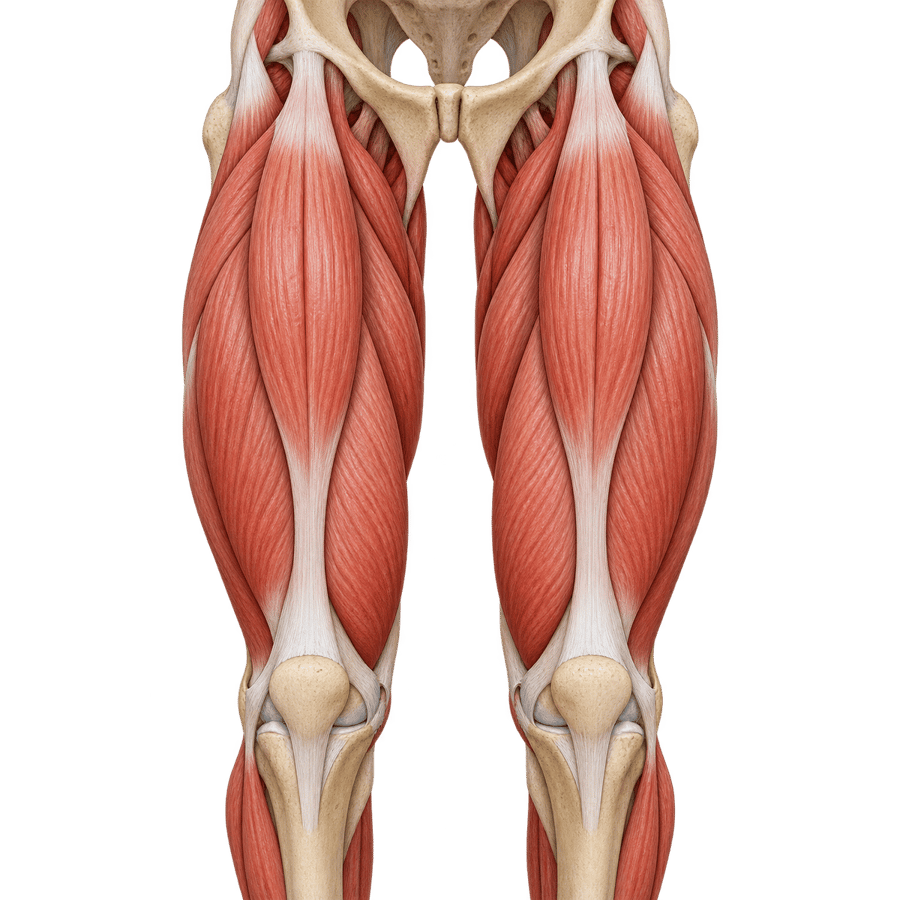
Think of pushing a stalled car. You lean in with straight arms and drive with your legs, because your arms on their own would get nowhere. The start of a rowing stroke is the same move, sitting down: straight arms, a big push from the legs, and only then the body and arms join in to finish it.
Is a rowing machine better than a bike or a treadmill?
The case for rowing
More of you does the work. Your legs, back and arms all join in, you’re sitting down with nothing pounding your knees, and a short session can be hard.
The case for the others
No technique to learn. Anyone can walk on a treadmill or pedal a bike on day one. The rower takes a few sessions to learn, and pulling hard with a bad stroke is the first thing Concept2 warns against.
We’d pick the machine you’ll use most. If that’s the rower, learn the stroke first and enjoy having one machine that works almost everything.
Where does it fit in the week?
The US guideline asks for 150 minutes of brisk activity a week, or 75 hard ones, plus strength work for every major muscle on two days. Rowing counts toward the first half. Two or three 20-minute sessions, one of them harder, cover a good share of it. We’d still lift on two days, since lifting heavy enough that the last few reps are hard is what the strength half asks for (why lift if you already walk?).
What we still don’t know
There aren’t big long-term studies of rowing machines and health the way there are for walking, running, cycling and swimming. The evidence here is how hard rowing is, which is well measured, and the guideline’s rule that any cardio at that effort counts.
4 sources
- Concept2, Rowing techniqueconcept2.com
- Herrmann SD and others, 2024 Adult Compendium of Physical Activities: a third update of the energy costs of human activities, Journal of Sport and Health Science, 2024, https://europepmc.org/article/MED/38242596 (values frompacompendium.com
- Centers for Disease Control and Prevention, Measuring physical activity intensitycdc.gov
- US Department of Health and Human Services, Physical Activity Guidelines for Americans, 2nd edition, executive summary, 2018odphp.health.gov
