How do you walk for exercise?
On this page
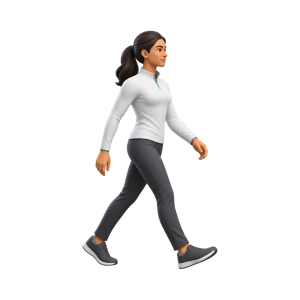
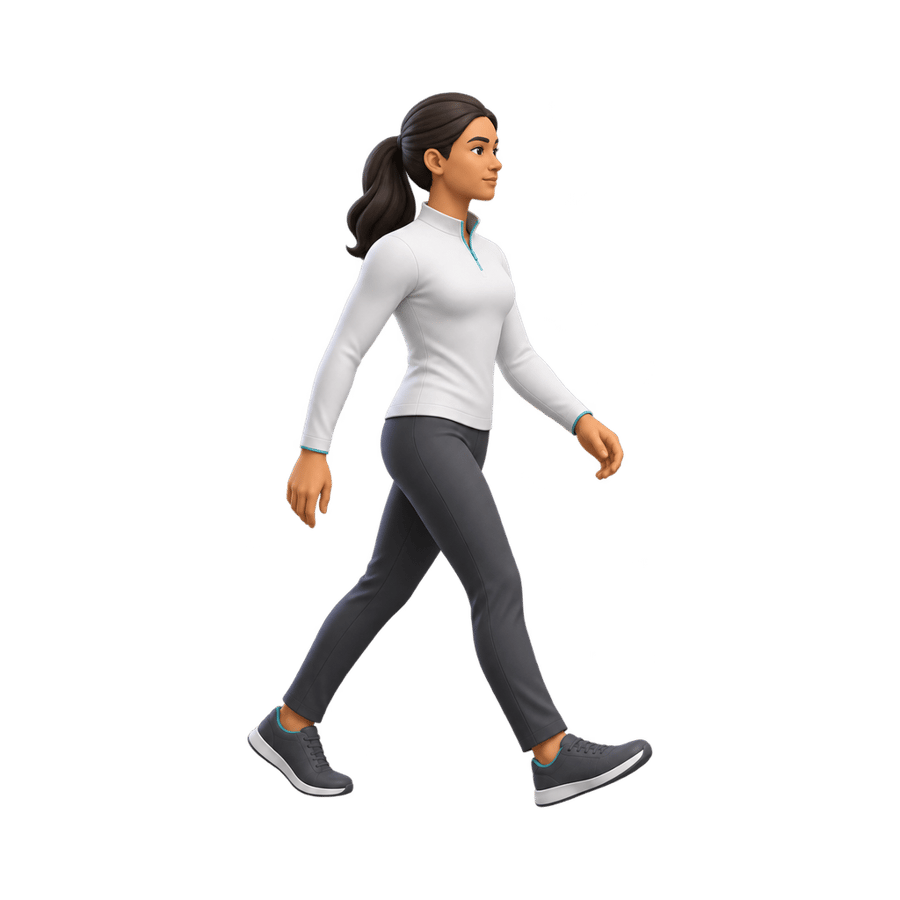
Walk fast enough that you can talk but not sing. That’s about 100 steps a minute, or 2.5 mph and up, and every minute at that pace counts toward your 150 a week. Once that feels easy, make part of it harder with a hill or a few fast stretches.
Almost everyone walks, so almost everyone has an opinion about whether it counts. Some people think their daily walk already covers them, when it’s a stroll to the car and back. Others think walking is what you do when you can’t really exercise, so they never take it seriously. The difference between the two is pace, and hardly anyone checks it.
What we’d do
Walk most days at a pace where you could talk on the phone but wouldn’t want to sing. Check your pace once with the tool below, so you know what brisk feels like in your legs. When 30 minutes gets easy, turn one walk a week into the interval walk: 3 minutes fast, 3 minutes easy, five times. Find a hill. And since walking only covers the cardio half of the week, lift something heavy on two days too.
If you remember three things
- Brisk is about 100 steps a minute. In 76 adults aged 21 to 40, that pace was moderate effort 91.4% of the time.
- Hills and speed move a walk up the ladder. A brisk 3.5 mph walk is 4.8 METs, and a steep hill at a brisk pace is 7, hard enough to count double.
- Intervals work for walkers too. Adults around 63 who mixed fast and easy walking had 13% stronger thighs after 5 months.
How fast is brisk?
The CDC lists “walking briskly (2.5 miles per hour or faster)” as moderate exercise, and gives a test you can do mid-walk. At a moderate pace you can talk but not sing. At a vigorous pace you can’t say more than a few words without stopping for a breath.
For walking there’s a number too. In 2019, Catrine Tudor-Locke’s team put 76 adults aged 21 to 40 on a treadmill, sped it up every five minutes, counted their steps and measured the oxygen they used. At 100 steps a minute, people were at moderate effort 91.4% of the time. At 130, they were at vigorous effort 70.7% of the time.
You can check yours in 15 seconds. Tap along with your steps below, or count them and multiply by 4. The tool plays a 100-step beat you can walk to.
How hard is each kind of walk?
The Compendium of Physical Activities is the reference book of how hard things are, measured in METs, the energy of an activity against sitting still. Its 2024 edition, built from measurements in adults 19 to 59, puts walking on a ladder. Pace moves you up it, and so do hills and a pack on your back.
- Nordic walking, 2.5 to 3.5 mph Brisk
- Brisk, 3.5 to 3.9 mph Brisk
- Hills, 1 to 5% grade Brisk
- Very brisk, 4.0 to 4.4 mph Brisk
- Hills, 6 to 10% grade Hard
- Very, very brisk, 4.5 to 4.9 mph Hard
- Hiking with a daypack Hard
METs: the energy of the activity against sitting still. CDC counts 3 to 5.9 as moderate and 6 or more as vigorous. Values from the 2024 Compendium of Physical Activities, measured in adults 19 to 59.
Two things stand out. A very fast walk on the flat, 4.5 to 4.9 mph, is 7 METs, the same as a brisk walk up a 6 to 10% hill. 4.5 mph is a very fast clip, and a hill gets you the same effort at an ordinary pace. And Nordic walking, with a pole in each hand at an ordinary 2.5 to 3.5 mph, comes out at 4.3, already in the brisk band.
How do you make a walk harder?
Walk faster. Push your step rate from 100 toward 130 a minute. Shorter, quicker steps get there sooner than longer ones.
Find a hill. A long gentle climb or a few short steep ones turn the same 30 minutes into a harder session without any running.
Carry a load. Hiking with a daypack is 7.8 METs on the ladder above.
Change pace on purpose. In a trial published in 2007, researchers gave 246 adults with an average age of 63 a walking plan for 5 months. One group walked 3 minutes fast, so fast they could only talk in short bursts, then 3 minutes easy, at least 5 times through, on 4 or more days a week. By the end their thigh strength was up 13% for straightening the knee and 17% for bending it, and their aerobic capacity was up 9% walking.
Easy Hard Warm-up and cool-down
The interval walk is one of the sessions in today’s session, with a beat that speeds up and slows down so you don’t have to watch a clock.
A picture from daily life
Think of a phone call on a walk. If you can chat and laugh without effort, you’re strolling. If you can keep talking but you’d be embarrassed to sing to the person on the other end, you’re brisk. If you have to tell them you’ll call back, you’re at hard effort, and that minute counts as two. Your breathing tells you the pace before any watch does, because the harder your muscles work, the more air they need.
Do golf, hikes and long slow walks count?
Golf counts if you walk it. Walking the course while carrying your clubs is 4.3 METs in the Compendium, inside the brisk band, and nine holes on foot is a long session that rarely feels like one. Leave the cart. A hike at a normal pace through fields and hills is 5.3, and a hike makes a good long weekend session, the kind that two-day weeks are built on (weekend workouts).
Slow steps still count for something. In a 2025 review, people who took about 7,000 steps a day had 47% lower risk of death than people who took 2,000, and those step counts include every slow step of the day. They just don’t add to the 150 brisk minutes. How many steps do you need? has the curve.
Is walking really enough?
The case for walking
It covers the cardio half, and you’ll keep doing it. 150 brisk minutes a week meets the US guideline, walking needs no gear, no gym and no skill, and you can still do it at 80.
The case for more
Harder minutes build more fitness. Across 28 trials, interval training raised VO2 max a little more than steady training did, and a hard minute counts as two. Walking also does little for your arms, back and chest, which is why the guideline has a strength half.
We’d walk most days and still lift twice a week. If you want to get fitter on top of that, the interval walk and hills come first, and running can come later if you want it (how to start running). Can walking raise your VO2 max? has the fitness side.
What we still don’t know
The step-rate thresholds came from adults aged 21 to 40, so if you’re older, trust the talk test over the number. The interval walking study also had a group that walked steadily, but the part of the paper we could open stops before comparing the two groups, so we don’t claim intervals beat steady walking. What it does show is that fast-and-easy walking made people in their 60s stronger and fitter in five months.
7 sources
- Centers for Disease Control and Prevention, Measuring physical activity intensitycdc.gov
- Tudor-Locke C and others, Walking cadence (steps/min) and intensity in 21 to 40 year olds: CADENCE-adults, International Journal of Behavioral Nutrition and Physical Activity, 2019europepmc.org
- Herrmann SD and others, 2024 Adult Compendium of Physical Activities: a third update of the energy costs of human activities, Journal of Sport and Health Science, 2024, https://europepmc.org/article/MED/38242596 (values frompacompendium.com
- Nemoto K and others, Effects of high-intensity interval walking training on physical fitness and blood pressure in middle-aged and older people, Mayo Clinic Proceedings, 2007europepmc.org
- Ding D and others, Daily steps and health outcomes in adults: a systematic review and dose-response meta-analysis, Lancet Public Health, 2025europepmc.org
- Milanović Z, Sporiš G and Weston M, Effectiveness of high-intensity interval training (HIT) and continuous endurance training for VO2max improvements: a systematic review and meta-analysis of controlled trials, Sports Medicine, 2015europepmc.org
- US Department of Health and Human Services, Physical Activity Guidelines for Americans, 2nd edition, executive summary, 2018odphp.health.gov