How much cardio do you need, how hard, and which kind is best?
On this page
- What counts as cardio?
- How much do you need?
- How hard should it be?
- What happens inside your muscles?
- A picture from daily life
- Steady or intervals?
- Which kind should you pick?
- When should you do it?
- How do you keep getting fitter?
- Four questions to pick your plan
- What changed since our old Cardio Guide
- What we still don’t know
Get 150 brisk minutes a week, or 75 hard ones, in whatever kind of cardio you’ll keep doing. Make most of it steady, at a pace where you can talk but not sing, and add some hard minutes once that feels easy. Steady training builds most of your fitness, and the hard minutes add the rest.
Cardio has a lot of camps. The zone 2 people say slow and long is the secret to living longer. The interval people say four minutes of suffering beats an hour of jogging. The runners and the cyclists argue about knees, and the swimmers wonder why anyone would do either. Someone who just wants to get healthier can spend a month scrolling forums and never put on their shoes. In the trials, the gap between the camps is small, and the gap between doing any of it and doing none is huge.
What we’d do
Pick something you like enough to do three or more times a week, and do most of it at a steady, talk-but-not-sing pace. Once you’re getting your 150 minutes, swap one session a week for something harder: an interval walk, hill repeats, or a few hard minutes on the bike. If you’re short on time, lean on the hard minutes, since each one counts as two. If you love long steady sessions, keep them. And lift twice a week too, since cardio is only one half.
If you remember three things
- Any kind counts. The guideline counts walking, cycling, swimming, dancing and sport the same way, by effort and minutes.
- Effort is something you can hear. Brisk means you can talk but not sing. Hard means a few words at a time, and each hard minute counts as two.
- Steady does most of it. Across 28 trials, steady training raised VO2 max by about 4.9 ml/kg/min against no exercise, and intervals by about 5.5.
What counts as cardio?
When people hear cardio they think of running, cycling, swimming, or the row of machines at the gym. Those count, but cardio is anything that raises your heart rate and your breathing for a while. A dance class counts. So does a pickup basketball game, a hike, heavy yard work, or a kettlebell circuit with short rests. CDC’s own list of moderate activity includes ballroom dancing, doubles tennis and water aerobics.
Your heart is a muscle, and working it makes it stronger. A trained heart pumps more blood with each beat, and trained muscles grow more of the tiny blood vessels that deliver oxygen to them. That’s the engine, and the fittest people in a study of 122,007 adults who did a treadmill test lived longest, with “no observed upper limit of benefit”. vo2max.guide has that number and how to raise it.
How much do you need?
The US guideline asks adults for 150 to 300 minutes of brisk activity a week, or 75 to 150 of hard activity, or a mix, since a hard minute counts as two. Any split of days works, and short bouts count. Put your week in and the ring shows where you stand, with the one change that would add the most.
- Cardio: 0 of 150 minutes.
- Strength: 0 of 2 days.
Brisk minutes Hard minutes, counted twice Strength days
Your normal week
Tap in a normal week. The ring fills as you go, and nothing leaves this browser.
Under 18? These tools are for adults. How much exercise does a teenager need?
How hard should it be?
Hard enough that you notice your breathing, and easy enough that you could keep going. CDC’s talk test does the job without any gear: at a brisk (moderate) effort you can talk but not sing, and at a hard (vigorous) one you can only say a few words before you need a breath. In the lab, brisk starts at 3 METs, three times the energy you use sitting still, and hard at 6.
- Hatha yoga Light
- Tai chi Brisk
- E-bike, high assist Brisk
- Golf, carrying clubs Brisk
- Brisk walk, 3.5 mph Brisk
- Easy rowing Brisk
- Water aerobics Brisk
- Easy laps Brisk
- Bike, 9.4 mph Brisk
- Soccer, casual Hard
- Jogging Hard
- Hike with a daypack Hard
- Singles tennis Hard
- Run, 12 min a mile Hard
- Hard rowing Hard
METs: the energy of the activity against sitting still. CDC counts 3 to 5.9 as moderate and 6 or more as vigorous. Values from the 2024 Compendium of Physical Activities, measured in adults 19 to 59.
If you train by heart rate, watches split effort into five zones. The old Gyroscope Cardio Guide used the same five. Zone 2 is the easy end of brisk, and zones 4 and 5 are the hard minutes. The zones depend on your max heart rate, which a formula only estimates, so the talk test beside each zone is the better guide for most people. What is zone 2? explains the easy end, and vo2max.guide’s heart rate zones calculator works out yours.
- 1 50 to 60% Relaxed, easy pace, rhythmic breathing Easy chatting
- 2 60 to 70% Comfortable pace, slightly deeper breathing, conversation possible Full sentences
- 3 70 to 80% Moderate pace, more difficult to hold conversation Short sentences
- 4 80 to 90% Fast pace and a bit uncomfortable, breathing forceful A few words
- 5 90 to 100% Sprinting pace, unsustainable for long period of time, labored breathing No words
Percent of max heart rate and the words for how each zone feels are Garmin's defaults, the same five zones most watches use. Max heart rate here is 208 minus 0.7 times age (Tanaka 2001), and your real max may differ. vo2max.guide's zone calculator takes a measured one.
What happens inside your muscles?
Your muscles make energy three ways, the same three the old Cardio Guide described.
- The aerobic system burns carbohydrates and fats with oxygen. It has a huge capacity, enough for hours, but it can’t deliver energy very fast.
- The glycolytic system breaks down stored carbohydrate without enough oxygen. It’s fast and runs out quickly, which is the burn you feel in a hard minute.
- The phosphocreatine system splits stored phosphocreatine for the first few seconds of an all-out effort, like a sprint or a jump.
For decades, coaches taught that these switch on one after another, with the aerobic system slow to wake up. A 2001 review showed that picture came from 1960s calculations “that now appear questionable.” Energy comes from all three in almost every activity, and in an all-out effort the aerobic system was already supplying half the energy at around 75 seconds. That helps explain why even short hard efforts train your heart and lungs.
A picture from daily life
Think of a hybrid car. The electric motor gives you instant power when you pull away from a light, and the gas engine handles the long highway miles. Most of the time they run together, and the engine is doing more of the work than the dashboard makes it look.
Your fast systems are the motor and your aerobic system is the engine. An interval session leans on the motor for a minute at a time, a long walk runs on the engine, and neither one ever runs completely alone.
Steady or intervals?
Both work, and the gap is small. In 28 trials of healthy adults 18 to 45, steady training raised VO2 max by about 4.9 ml/kg/min against no exercise and intervals by about 5.5, and head to head intervals came out ahead by about 1.2. Hard minutes seem to help most when the week is light. In 116,221 US health professionals followed for 30 years, extra hard minutes went with lower risk in people doing under 300 brisk minutes a week, and added nothing the researchers could see above that.
Easy Hard Warm-up and cool-down
The interval walk is the Nemoto 2007 trial's (3 minutes fast, 3 easy, five times). The 4x4 is Helgerud 2007's. The steady session is a typical example.
Walking can be made hard too. In a trial of 246 adults around 63, walking 3 minutes fast and 3 easy, five times through, four days a week, raised thigh strength 13% and walking fitness 9% in 5 months. Steady or intervals? has every interval shape from the old guide, from Tabata to fartlek, and who each one suits.
Which kind should you pick?
The one you’ll still be doing in March. Choose by what your joints like, what’s close to home, and what you look forward to. Each of these has its own page with how to start, how to make it harder and what the studies found.
Brisk walking
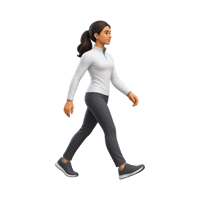
Brisk, 4.8 METs (Walking, 3.5 to 3.9 mph, level, brisk)
Good for: The cardio half for almost anyone, anywhere, with nothing to buy.
How to start: Ten minutes at a pace where you can talk but not sing, about 100 steps a minute.
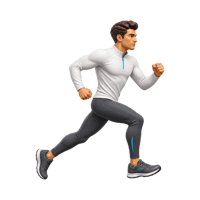
Running
Hard, 8.5 METs (Running, 5.0 to 5.2 mph (12 min/mile))
Good for: The most fitness for your time, and a mile time you can watch drop.
How to start: Run a minute, walk a minute and a half, three times a week.
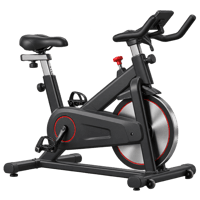
Cycling
Brisk, 5.8 METs (Bicycling, leisure, 9.4 mph)
Good for: Long sessions that are easy on your joints, and a commute that counts.
How to start: Twenty easy minutes on a bike or a stationary bike, then make one stretch harder.
Swimming
Brisk, 5.8 METs (Swimming laps, freestyle, slow, recreational)
Good for: Cardio with no pounding, for sore joints, big bodies and hot days.
How to start: Swim one length, rest 30 seconds, and repeat for 15 minutes.
Rowing machine
Brisk, 5.0 METs (Rowing, stationary ergometer, under 100 watts, moderate effort)
Good for: Legs, back and arms in one machine, in less time than it sounds.
How to start: Learn the order (legs, body, arms), then row easy for 3 minutes, rest 1, five times.

Hiking
Brisk, 5.3 METs (Hiking or walking at a normal pace through fields and hillsides)
Good for: A long weekend session that doesn't feel like a workout.
How to start: A flat trail for an hour, then add hills.
Elliptical and stair machines
Brisk, 5.0 METs (Elliptical trainer, moderate effort)
Good for: Gym cardio without the impact of running.
How to start: Fifteen minutes at a talk-but-not-sing effort.
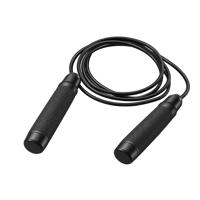
Jumping rope
Hard, 8.3 METs (Rope jumping, slow pace, under 100 skips/min)
Good for: Hard minutes in a hotel room or a garage.
How to start: Thirty seconds on, thirty off, five times.
Sports count too, by how they feel. Doubles tennis is brisk, singles is hard, and a soccer game is intervals with a ball. The map of exercise types covers play, strength and balance alongside the cardio.
When should you do it?
Whenever you’ll do it. The one catch is late, hard sessions: in 14,689 WHOOP wearers, hard workouts that ended within about 4 hours of sleep pushed sleep later, and earlier ones didn’t (the evening workout myth). If you lift and do cardio on the same day, strength.guide covers whether cardio gets in the way of your gains (cardio kills your gains). And burning fat during a session isn’t the same as losing it, since that comes down to your whole day, which bodyfat.guide covers in the fat-burning zone myth.
How do you keep getting fitter?
Ask a little more of yourself every few weeks, the same way you’d add weight to a lift. If you walk a 2-mile loop in 36 minutes, try it in 34. If you swim 20 lengths, try 22. If you do 10 minutes of intervals, make it 12. Once your steady sessions feel easy, that’s the moment to make one of them harder.
The best single measure of cardio fitness is VO2 max. Watches estimate it, and vo2max.guide shows how far to trust yours and how to raise it.
Four questions to pick your plan
The old Cardio Guide ended with four questions, and they still work.
- How fit are you now? Starting from nothing, begin with brisk walking or easy cycling and the interval walk. Already active, add one hard session a week.
- How much time do you have? Plenty, and steady sessions fill your 150 minutes. Very little, and hard minutes count double.
- What’s your goal? A race needs mostly easy miles plus some hard ones. A long healthy life needs the guideline and both halves.
- What do you enjoy? This one decides more than the other three. Like running? Run. Like swimming? Swim. Play a sport? That counts.
What changed since our old Cardio Guide
- The guideline is the 2018 US one. The old guide quoted the American Heart Association’s 150 and 75 minutes. The Physical Activity Guidelines for Americans ask for the same, plus strength on two days and balance after 65, and they dropped the rule that only 10-minute bouts counted.
- Zone 2 is one part of the week. The old guide called it “a vital part of any program”. A 2025 review found the evidence doesn’t support zone 2 as the best intensity for the general public, and that harder efforts matter more when the week is short. What is zone 2?
- Short hard bursts are for beginners too. The old guide saved true HIIT for “intermediate to advanced” trainees. Hard bursts in daily life, like a fast flight of stairs, went with lower risk in people who never exercised. Exercise snacks
- The zones and the fitness number moved. Heart rate zones and VO2 max now live on vo2max.guide, and calories on tdee.guide.
What we still don’t know
The fitness trials were short and mostly in young adults. The long-term studies of death followed people who chose their own exercise, and none of them assigned people to steady or interval training for decades. Nobody knows yet whether one kind lowers the risk of dying more than another at the same weekly total.
13 sources
- US Department of Health and Human Services, Physical Activity Guidelines for Americans, 2nd edition, executive summary, 2018odphp.health.gov
- Centers for Disease Control and Prevention, Measuring physical activity intensitycdc.gov
- Herrmann SD and others, 2024 Adult Compendium of Physical Activities: a third update of the energy costs of human activities, Journal of Sport and Health Science, 2024europepmc.org
- Garmin, Forerunner 245 owner's manual, heart rate zoneswww8.garmin.com
- Tanaka H, Monahan KD and Seals DR, Age-predicted maximal heart rate revisited, Journal of the American College of Cardiology, 2001europepmc.org
- Milanović Z, Sporiš G and Weston M, Effectiveness of high-intensity interval training (HIT) and continuous endurance training for VO2max improvements: a systematic review and meta-analysis of controlled trials, Sports Medicine, 2015europepmc.org
- Gastin PB, Energy system interaction and relative contribution during maximal exercise, Sports Medicine, 2001europepmc.org
- Lee DH and others, Long-term leisure-time physical activity intensity and all-cause and cause-specific mortality: a prospective cohort of US adults, Circulation, 2022europepmc.org
- Nemoto K and others, Effects of high-intensity interval walking training on physical fitness and blood pressure in middle-aged and older people, Mayo Clinic Proceedings, 2007europepmc.org
- Helgerud J and others, Aerobic high-intensity intervals improve VO2max more than moderate training, Medicine and Science in Sports and Exercise, 2007europepmc.org
- Storoschuk KL and others, Much ado about zone 2: a narrative review assessing the efficacy of zone 2 training for improving mitochondrial capacity and cardiorespiratory fitness in the general population, Sports Medicine, 2025europepmc.org
- Leota J and others, Dose-response relationship between evening exercise and sleep, Nature Communications, 2025europepmc.org
- Mandsager K and others, Association of cardiorespiratory fitness with long-term mortality among adults undergoing exercise treadmill testing, JAMA Network Open, 2018europepmc.org
