What kinds of exercise are there, and what is each one good for?
On this page
Every kind of exercise builds one of four things: your heart and lungs, your strength, your balance and mobility, or, if it’s a game, a mix of them while you’re busy having fun. You need the first two every week. Balance counts for more with each decade, and play is the easiest way to keep any of it going.
Ask ten people what exercise is and you’ll get ten pictures. A treadmill at the gym. A 6 a.m. run. A spin class with loud music. Plenty of people think yoga doesn’t count because you barely sweat, that a Saturday tennis game is a hobby rather than training, and that lifting weights is for people who want to look big. Gyroscope’s old Cardio Guide split exercise into three families: resistance training, cardio, and movement and mobility. That still holds, and we add a fourth, play, because sport is how a lot of people get most of their exercise without calling it that.
The name of the activity counts for much less than two things: which family it belongs to, and how hard you do it. A walk can be light or brisk. Tennis can be a gentle rally or a hard singles match. Once you know what each kind builds, picking a week gets easy.
What we’d do
Pick one heart-and-lungs activity you like for most of your 150 minutes a week, and if you can’t pick, walk briskly. Add two short strength sessions for every big muscle. After 65, or sooner if you feel unsteady, add a few minutes of balance work. Then find a game, a class or a trail you look forward to, because the week you enjoy is the one you’ll repeat.
If you remember three things
- The two halves do different jobs. People who did both cardio and strength had 40% lower risk of death than people who did neither.
- How hard decides whether it counts. Brisk effort counts toward the 150 minutes, and a hard minute counts as two, whatever the activity is called.
- Play counts. In 80,306 British adults, people who played racket sports had 47% lower risk of death than people who didn’t.
 Heart and lungsA bigger engine: your heart pumps more with each beat and your muscles use more oxygen.
150 brisk minutes a week, or 75 hard ones
 StrengthMuscle and bone, and the strength to carry, climb and get up off the floor.
Every major muscle on 2 or more days a week
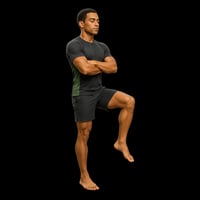 Balance and mobilitySteadier feet and joints that move through their whole range.
Balance work for adults 65 and up, no set number of days
- Yoga
- Tai chi
- Balance practice
- Stretching and mobility
 PlaySport and games, which count toward the cardio half and are the easiest to keep doing.
Counts as brisk or hard minutes by how it feels
- Tennis, pickleball and badminton
- Basketball and soccer
- Dancing and classes
- Golf, walking the course
Heart and lungs
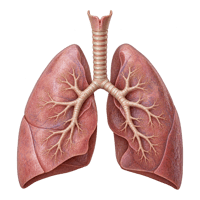
This is cardio, anything that gets you breathing harder for a while: walking briskly, running, cycling, swimming, rowing, hiking, the elliptical. It builds the engine. Your heart pumps more blood with each beat and your muscles get better at using the oxygen in it, which is what VO2 max measures. The US guideline asks for 150 brisk minutes a week, or 75 hard ones, and it counts any of these kinds the same way, by effort and minutes.
Choose by what your joints like, what’s near you, and what you’ll still be doing in March. Running gives you the most fitness for your time. Cycling and swimming go easy on sore knees. Rowing works your legs, back and arms together. Walking needs nothing at all.
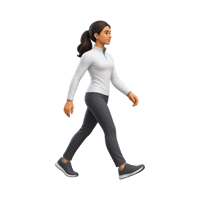
Brisk walking
Brisk, 4.8 METs (Walking, 3.5 to 3.9 mph, level, brisk)
Good for: The cardio half for almost anyone, anywhere, with nothing to buy.
How to start: Ten minutes at a pace where you can talk but not sing, about 100 steps a minute.
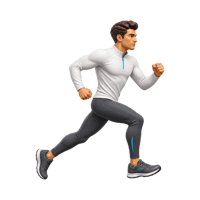
Running
Hard, 8.5 METs (Running, 5.0 to 5.2 mph (12 min/mile))
Good for: The most fitness for your time, and a mile time you can watch drop.
How to start: Run a minute, walk a minute and a half, three times a week.
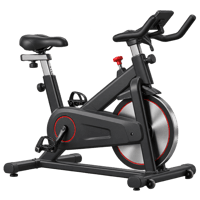
Cycling
Brisk, 5.8 METs (Bicycling, leisure, 9.4 mph)
Good for: Long sessions that are easy on your joints, and a commute that counts.
How to start: Twenty easy minutes on a bike or a stationary bike, then make one stretch harder.
Swimming
Brisk, 5.8 METs (Swimming laps, freestyle, slow, recreational)
Good for: Cardio with no pounding, for sore joints, big bodies and hot days.
How to start: Swim one length, rest 30 seconds, and repeat for 15 minutes.
Rowing machine
Brisk, 5.0 METs (Rowing, stationary ergometer, under 100 watts, moderate effort)
Good for: Legs, back and arms in one machine, in less time than it sounds.
How to start: Learn the order (legs, body, arms), then row easy for 3 minutes, rest 1, five times.
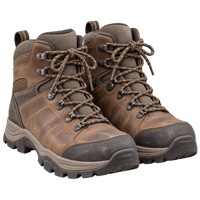
Hiking
Brisk, 5.3 METs (Hiking or walking at a normal pace through fields and hillsides)
Good for: A long weekend session that doesn't feel like a workout.
How to start: A flat trail for an hour, then add hills.
Elliptical and stair machines
Brisk, 5.0 METs (Elliptical trainer, moderate effort)
Good for: Gym cardio without the impact of running.
How to start: Fifteen minutes at a talk-but-not-sing effort.
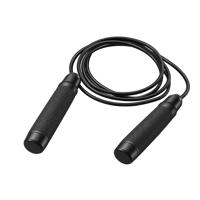
Jumping rope
Hard, 8.3 METs (Rope jumping, slow pace, under 100 skips/min)
Good for: Hard minutes in a hotel room or a garage.
How to start: Thirty seconds on, thirty off, five times.
Strength
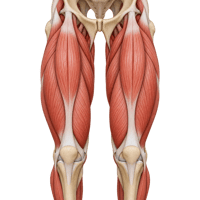
Strength work is anything that makes your muscles work hard against a load: dumbbells, machines, a barbell, bands, your own body weight, a heavy bag of groceries. The US guideline asks for every major muscle on 2 or more days a week, and none of the cardio kinds covers it, since a walk doesn’t load your arms, chest or back enough. It’s the half most people skip. Only about 1 in 3 American adults does it (32.9% in 2024).
Lifting weights
Brisk, 3.5 METs (Resistance (weight) training, multiple exercises, 8 to 15 reps)
Good for: The strength half of the guideline, and muscle you keep as you age.
How to start: Six moves for the big muscles, two sets each, twice a week.
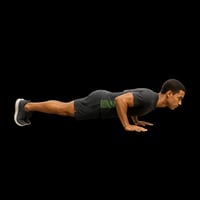
Body weight moves
Brisk, 3.0 METs (Body weight resistance exercises (squat, lunge, push-up), general)
Good for: Strength with no gear: squats, push-ups, lunges and planks.
How to start: Chair squats and counter push-ups, until two or three good reps are left.
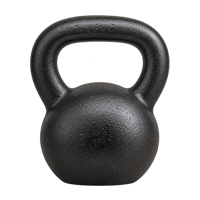
Kettlebells and circuits
Hard, 7.5 METs (Circuit training, including kettlebells, minimal rest, vigorous)
Good for: Strength and hard minutes in the same session.
How to start: One kettlebell, swings and goblet squats, after you've learned them.
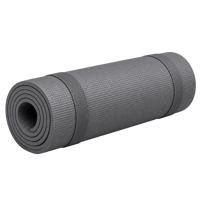
Pilates
Light, 2.8 METs (Pilates, general)
Good for: Core strength and control, on a mat or a machine.
How to start: A beginner class, once a week, beside your walking.
Pilates sits here because it trains your core against your own weight or a machine’s springs, though it measures light by effort, so it doesn’t add to the cardio minutes. For the program and every muscle group, strength.guide has the depth. Why lift if you already walk? covers where lifting fits in your week.
Balance and mobility
Balance work keeps your feet under you. The US guideline asks adults 65 and up to add it to the week, with no set number of days. In 108 trials of people 60 and up living at home, exercise cut the rate of falls by 23%, balance and functional exercise by 24%, and tai chi may cut it by 19%. Balance plus strength probably cut it by 34%.
Yoga lands in an odd spot. CDC lists active styles like vinyasa or power yoga as moderate, but the Compendium measured most yoga under the brisk line, with only power yoga and the hardest classes above it. It’s still useful exercise. In 218 trials of people with depression, yoga eased symptoms almost as much as walking or jogging did.
- Hatha yoga Light
- Vinyasa yoga Light
- Hot yoga Brisk
- Sun salutations Brisk
- Power yoga Brisk
- Hatha, high intensity Hard
METs: the energy of the activity against sitting still. CDC counts 3 to 5.9 as moderate and 6 or more as vigorous. Values from the 2024 Compendium of Physical Activities, measured in adults 19 to 59.
Yoga
Light, 2.3 METs (Yoga, Hatha)
Good for: Mobility, balance and calm. Power and vinyasa styles count as moderate.
How to start: A beginner class or a 20-minute video, twice a week.
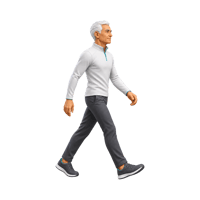
Tai chi
Brisk, 3.3 METs (Tai chi, qi gong, general)
Good for: Fewer falls after 60, at a pace almost anyone can do.
How to start: A class once or twice a week.
Balance practice
Good for: Steadier feet: heel-to-toe walking and one-foot holds.
How to start: Hold one foot up at the kitchen counter for 20 seconds a side.
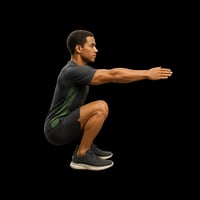
Stretching and mobility
Light, 2.3 METs (Stretching, mild)
Good for: Range of motion in stiff hips, ankles and shoulders.
How to start: A few minutes after a walk, when you're warm.
Play
Sport and games count toward the cardio half by how they feel. Doubles tennis is brisk, singles is hard, and a pickup basketball game is mostly hard with short rests, which is interval training without the stopwatch. Play also comes with people who expect you to show up, and that does a lot of the work of keeping you going.
- Racket sports
- Swimming
- Aerobics
- Cycling
- Running No clear difference
- Soccer No clear difference
80,306 British adults, people who did each sport against people who didn't, adjusted for other things that differ between them (Oja 2017). Associations in people who chose their sport, not a promise to one person.
These are associations in people who chose their sport, so part of the gap is who plays tennis rather than what tennis does. But the pattern holds across several sports, so a game you love is as good a pick as any.
Tennis, pickleball and badminton
Brisk, 4.5 METs (Tennis, doubles)
Good for: Hard minutes that feel like a game, with people who expect you to show up.
How to start: Doubles once a week. Singles counts as hard.
Basketball and soccer
Hard, 7.0 METs (Soccer, casual, general)
Good for: Sprints and stops you'd never do on your own.
How to start: A pickup game or a rec league, once a week.
Dancing and classes
Hard, 6.0 METs (Ballroom dance, recreational)
Good for: Cardio with music and a crowd. Most gym classes count too.
How to start: One class a week, at the back of the room.
Golf, walking the course
Brisk, 4.3 METs (Golf, walking, carrying clubs)
Good for: Hours of walking, if you leave the cart.
How to start: Walk nine holes and carry or pull your bag.
How hard is each one?
The chart below puts common kinds side by side by their measured effort. Anything in the green band counts toward the 150 minutes, and anything in the orange counts double.
- Hatha yoga Light
- Tai chi Brisk
- E-bike, high assist Brisk
- Golf, carrying clubs Brisk
- Brisk walk, 3.5 mph Brisk
- Easy rowing Brisk
- Water aerobics Brisk
- Easy laps Brisk
- Bike, 9.4 mph Brisk
- Soccer, casual Hard
- Jogging Hard
- Hike with a daypack Hard
- Singles tennis Hard
- Run, 12 min a mile Hard
- Hard rowing Hard
METs: the energy of the activity against sitting still. CDC counts 3 to 5.9 as moderate and 6 or more as vigorous. Values from the 2024 Compendium of Physical Activities, measured in adults 19 to 59.
A picture from daily life
Think of a kitchen. With a good knife and a pan you can cook almost anything, and those are your two halves, cardio and strength. Balance is the cutting board you don’t think about until it slips. And play is the dinner party, the reason you bother cooking well at all. You can own a hundred gadgets, but a cook who uses the knife and the pan every day eats better than one with a drawer full of tools that never come out.
How do you put them in one week?
A plain week covers everything:
- Most days: a brisk walk, a ride, a swim or a run. Five 30-minute sessions, or three longer ones.
- Two days: a strength session of six moves, for legs, chest, back and core.
- After strength, at 65 and up: a few minutes of balance, like heel-to-toe walking and one-foot holds at the kitchen counter.
- Once a week: a game, a class or a long hike, for fun.
The quiz sizes that to where you are now, and Your week shows how close your current week already is.
Does it matter which one you pick?
Some kinds do more
Hard efforts build fitness fastest. Across 28 trials, intervals raised fitness a bit more than steady cardio, about 5.5 against 4.9 ml/kg/min. Running went with 27% lower risk of death in a review of 232,149 people, at almost any dose.
The one you keep does more
The gaps between kinds are small next to the gap between doing something and quitting. Among 5,240 new members of one fitness center, 63% had stopped going before their third month. A kind you enjoy keeps you in the game.
Both are true. Within the cardio half, pick by enjoyment first, then nudge part of the week harder once it feels easy. Steady or intervals? covers the hard part.
What we still don’t know
Nobody has assigned thousands of people to tennis, swimming or running for twenty years and counted who lived longest. The sport studies follow people who chose their own, and people who play racket sports may differ in money, health and free time from people who don’t. The effort numbers come from lab measurements in adults 19 to 59, so an older body or a beginner may work harder at the same pace. That’s one reason the talk test, which adjusts to you, is a better guide than any table.
12 sources
- Herrmann SD and others, 2024 Adult Compendium of Physical Activities: a third update of the energy costs of human activities, Journal of Sport and Health Science, 2024europepmc.org
- Compendium of Physical Activities, activity codes and MET valuespacompendium.com
- Centers for Disease Control and Prevention, Measuring physical activity intensitycdc.gov
- US Department of Health and Human Services, Physical Activity Guidelines for Americans, 2nd edition, executive summary, 2018odphp.health.gov
- Healthy People 2030, PA-04, adults who do enough muscle-strengthening activityodphp.health.gov
- Momma H and others, Muscle-strengthening activities are associated with lower risk and mortality in major non-communicable diseases: a systematic review and meta-analysis of cohort studies, British Journal of Sports Medicine, 2022europepmc.org
- Oja P and others, Associations of specific types of sports and exercise with all-cause and cardiovascular-disease mortality: a cohort study of 80 306 British adults, British Journal of Sports Medicine, 2017europepmc.org
- Sherrington C and others, Exercise for preventing falls in older people living in the community, Cochrane Database of Systematic Reviews, 2019europepmc.org
- Noetel M and others, Effect of exercise for depression: systematic review and network meta-analysis of randomised controlled trials, BMJ, 2024europepmc.org
- Milanović Z, Sporiš G and Weston M, Effectiveness of high-intensity interval training (HIT) and continuous endurance training for VO2max improvements: a systematic review and meta-analysis of controlled trials, Sports Medicine, 2015europepmc.org
- Pedisic Z and others, Is running associated with a lower risk of all-cause, cardiovascular and cancer mortality, and is the more the better? A systematic review and meta-analysis, British Journal of Sports Medicine, 2020europepmc.org
- Sperandei S, Vieira MC and Reis AC, Adherence to physical activity in an unsupervised setting: explanatory variables for high attrition rates among fitness center members, Journal of Science and Medicine in Sport, 2016europepmc.org
