Exercise for beginners: how to start after years off
On this page
Start low and go slow. In your first week, take three 10-minute brisk walks and do two short strength sessions. Repeat that in week two, add one change in week three and 5 more minutes to each walk in week four. Your first hour a week is the biggest gain you’ll ever make.
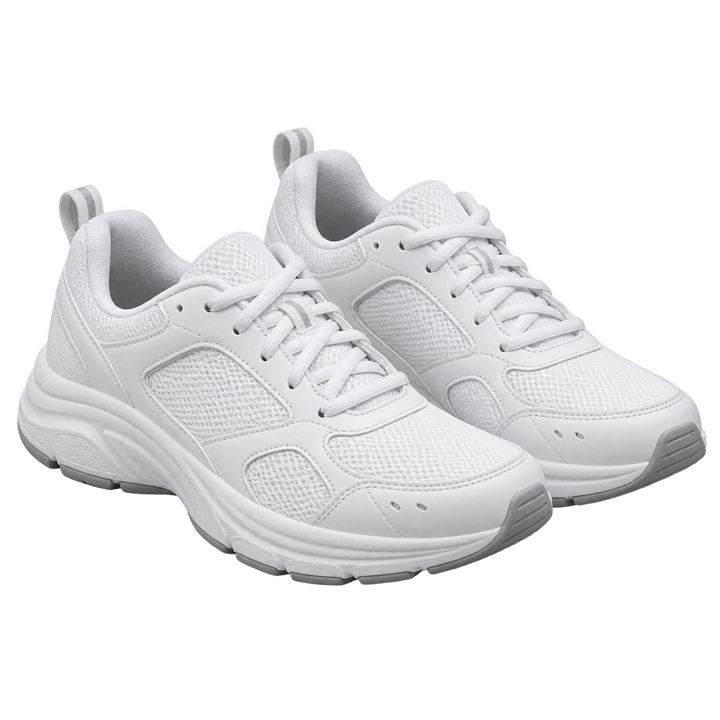
Most comebacks start too big. It’s January, or the morning after a bad checkup, and the plan is an hour a day, six days a week. By day four everything aches, by day ten a busy week gets in the way, and by the end of the month the plan is gone along with the confidence. Other people never start at all because they’re waiting to be ready: to lose some weight first, to find the right gym, to buy the right shoes. Both groups set the bar far above where the biggest gains are.
What we’d do
Start at about half of what you think you can do. Three 10-minute brisk walks and two 12-minute strength circuits is a real first week. Put the days in your calendar like appointments, repeat the same week once so it becomes a habit, and only then add one thing. If you miss a day, make the next one count instead of starting over on Monday. If you have chest pain, faint easily or have a heart condition, kidney disease or diabetes and aren’t active now, talk to a doctor first.
If you remember three things
- ”Start low and go slow” is the US guideline’s own advice for inactive people.
- Your first hour a week does the most. Less than the minimum went with 20% lower risk of death than nothing, in 661,137 adults.
- Short bits count. A 10-minute walk, or a minute of fast stairs, is exercise.
Why start so small?
Because the biggest jump in benefit is right at the start. In 661,137 adults followed for about 14 years, people doing less than the guideline’s minimum had 20% lower risk of death than people doing nothing. Getting all the way to 1 to 2 times the minimum only took that to 31%. Three 10-minute walks a week is already on the steep part of that curve.
It’s also the safe way in. The US guideline says inactive people should “start low and go slow” by starting with lower intensity activities and gradually increasing how often and how long they’re done. When the American College of Sports Medicine updated its screening advice in 2015, it noted that exercise is safe for most people, that exercise-related heart events are often preceded by warning signs, and that the risks “lessen as individuals become more physically active/fit”. The first few weeks are when you build that.
Your first four weeks
This is the plan the quiz builds for someone starting from almost nothing with three days a week. The amounts are our pacing, built on the guideline’s start low and go slow.
| Week | What to do |
|---|---|
| 1 | Monday, Wednesday and Friday: a 10-minute brisk walk. Monday and Friday: the strength circuit, 2 rounds, about 12 minutes |
| 2 | Repeat week 1. The habit comes first |
| 3 | Start your one change: build toward 150 brisk minutes a week (120 to go), a little more each week |
| 4 | Add 5 minutes to each walk |
| 5 | Redo the chair stand test from the quiz and check your phone’s step average |
If you already walk a little, start with three 15-minute walks and the same two circuits. If you can only do weekends, two longer days count the same. In 350,978 US adults, the same weekly minutes in one or two days went with the same death rates as minutes spread through the week. Where do I start? builds yours in eight taps.
Week one on the ring: 30 brisk minutes and both strength notches lit. It’s a small ring, and it’s a real start.
A picture from daily life
Think of lighting a campfire. Put a big log on a match and the match goes out. You start with paper and kindling, let it catch, add small sticks, and only then the logs. Ten minutes later you have a fire that would have been impossible to start with the log.
The first weeks are the kindling. A 10-minute walk feels too small to matter, and it’s small enough that you’ll still be doing it in week three, when the bigger pieces go on.
What should the first sessions feel like?
Walks should pass the talk test: you can talk but not sing. For strength moves, stop each one with two or three good reps left in you, never at failure. Today’s session talks you through both, with a beat to walk to.
Know the stop signs from the first day. Stop and rest if you feel chest pain, dizziness, an irregular heartbeat, nausea or you can’t catch your breath.
Chest pain or pressure, or pain in your arm, jaw or back, means call 911.
What if you want to run?
Then Couch to 5K is the classic way in. The NHS’s free plan takes about nine weeks, “or longer, depending on what works best for you”, with three runs a week. In the first week you run for 1 minute and walk for 1 minute 30 seconds, and by the end you can run 30 minutes without stopping. Taking longer than nine weeks is fine. How does Couch to 5K work?
If running isn’t for you, interval walking gets some of the same feeling. In 246 adults around 63, walking 3 minutes fast and 3 minutes easy, five or more times, four days a week, made their thighs 13% to 17% stronger and their walking fitness 9% higher in five months.
What if you’re over 50, or over 65?
After 50, lift first. Two short strength sessions work the muscles that walking leaves out, and brisk walks cover the cardio half. After 65, add a few minutes of balance work to every session, like walking heel to toe along a counter, and judge your effort against your own fitness, which is how the guideline puts it for older adults. How do I start exercising after 50? and How much exercise do seniors need?
What usually gets in the way?
- No time. Two long days count the same as five short ones, and a stair burst takes one minute. In non-exercisers, about 4 minutes a day of hard bursts in daily life went with 26% to 30% lower risk of death.
- Boredom. The interval walk changes pace every 3 minutes, and Couch to 5K gives you a finish line.
- It hurts. Use seated and supported versions, like chair squats to a high seat. Pain that’s sharp, getting worse or wakes you at night goes to a doctor or physical therapist.
- Not knowing what to do. Let the session player do the thinking. Prop up your phone and follow the voice.
- Starting strong, then stopping. Start at half what you think you can do. If you miss a day, make the next one count.
Getting started and staying with it, in depth
- Your first four weeks, day by day, for three starting points, straight from the quiz’s plan.
- Exercise at home with no equipment: walks from your front door and six moves with a chair and a counter, no gym needed.
- Your first time at the gym: what to bring, the warm-up, six moves and how to come back.
- Fitting exercise into a desk job: the hour that offsets a day in a chair, in pieces.
- Exercise snacks: one-minute bursts that count.
- Weekend workouts: when Saturday and Sunday are all you have.
- Staying with it: what kept people going past the first month.
- Who should check with a doctor first, and the stop signs.
- The map of exercise types, to pick the kind you’ll enjoy.
Will a little really do anything?
The doubt
Ten minutes is too small to matter. Real fitness takes real workouts, and a beginner plan this easy sounds like a waste of the motivation you have right now.
The evidence
The steep part of the curve is the small part. Less than the minimum went with 20% lower risk than nothing, the biggest single step on the curve. And the plan grows every week after the second.
9 sources
- US Department of Health and Human Services, Physical Activity Guidelines for Americans, 2nd edition, executive summary, 2018odphp.health.gov
- Arem H and others, Leisure time physical activity and mortality: a detailed pooled analysis of the dose-response relationship, JAMA Internal Medicine, 2015europepmc.org
- Riebe D and others, Updating ACSM's recommendations for exercise preparticipation health screening, Medicine and Science in Sports and Exercise, 2015europepmc.org
- Stamatakis E and others, Association of wearable device-measured vigorous intermittent lifestyle physical activity with mortality, Nature Medicine, 2022europepmc.org
- dos Santos M and others, Association of the weekend warrior and other leisure-time physical activity patterns with all-cause and cause-specific mortality, JAMA Internal Medicine, 2022europepmc.org
- Nemoto K and others, Effects of high-intensity interval walking training on physical fitness and blood pressure in middle-aged and older people, Mayo Clinic Proceedings, 2007europepmc.org
- NHS, Get running with Couch to 5Knhs.uk
- MedlinePlus, Being active when you have heart disease, US National Library of Medicinemedlineplus.gov
- Centers for Disease Control and Prevention, Heart attack symptoms, risk, and recoverycdc.gov