How do you fit exercise into a desk job?
On this page
Find about an hour of moving a day, in pieces you can fit around the work. A brisk walk before you start, another after lunch and after dinner, and two one-minute stair bursts add up to 59 minutes. In a million adults, people who sat more than 8 hours a day but moved 60 to 75 minutes had no clear extra risk from all that sitting.
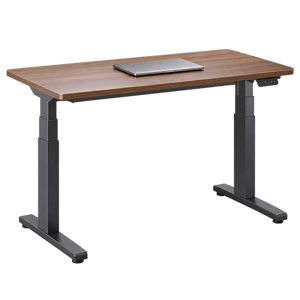
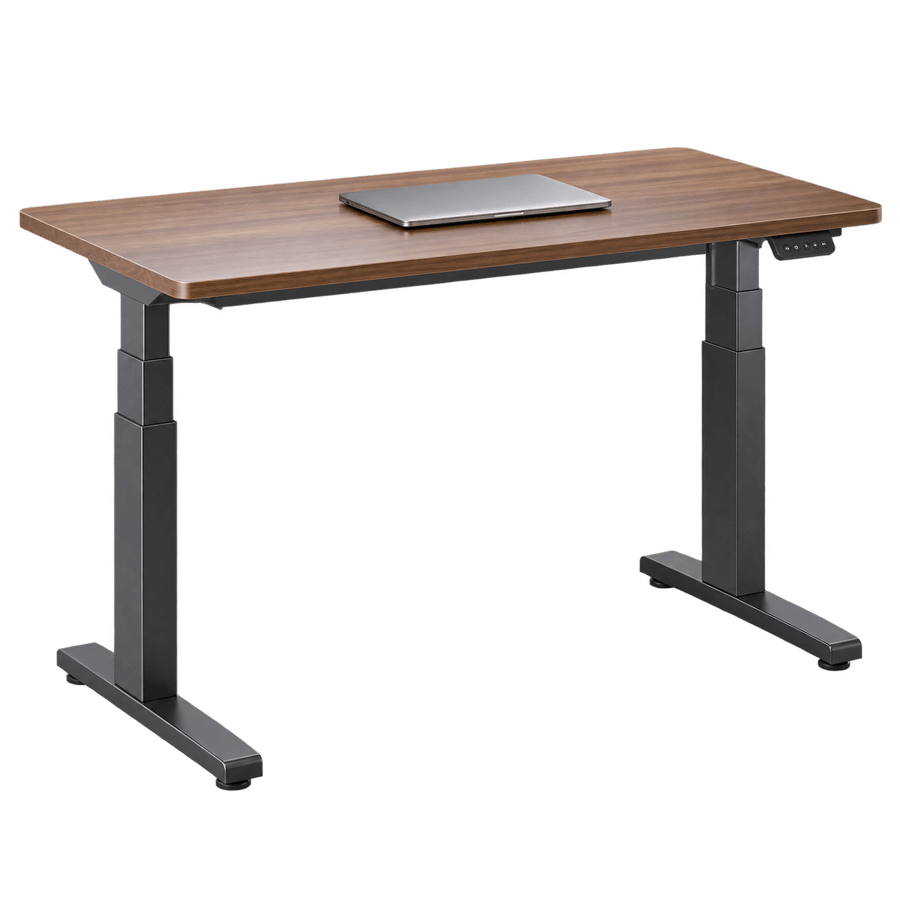
There are two common reactions to a desk job. One is to give up: if sitting all day is the problem and the job is the sitting, nothing short of a new job will help. The other is to buy a fix, a standing desk or a 6 a.m. class, and trust it to cancel the other nine hours. The first is too gloomy and the second is too hopeful. A standing desk keeps you on your feet without getting your heart rate up, and one 30-minute class covers about half of the hour that offset sitting in the big study.
What we’d do
Put the walks where the day already has gaps: the commute, right after lunch and after dinner. Take the stairs fast twice a day, once mid-morning and once mid-afternoon. On two lunch breaks a week, do the 12-minute strength circuit in a meeting room or at home. Keep the standing desk if you like it, but only count the walks toward your minutes.
If you remember three things
- About an hour a day offset the sitting. 60 to 75 minutes of moderate activity, in 1,005,791 adults.
- Pieces count. The US guideline dropped its 10-minute rule, and adults who sit less and move at all gain something.
- Standing is still light. Standing work sits under the line for moderate exercise, and a brisk walk is well over it.
How much moving offsets a day at a desk?
The best answer comes from a 2016 study that pooled 1,005,791 adults. The researchers sorted people by how much they sat and how much they moved. People in the most active quarter, about 60 to 75 minutes a day of moderate activity like brisk walking, had no clear extra risk of death even when they sat more than 8 hours a day (a hazard ratio of 1.04, where 1 means no difference). The two least active quarters had 12% to 59% higher death rates.
One thing didn’t wash out. People who watched a lot of TV still had some extra risk even when they were very active, so evening screen time is the harder sitting to offset. Does a workout cancel a day of sitting? has the whole study.
How far are you from the hour?
Put in a normal workday. The tool shows how much of the hour you move now, how much is missing, and where it could fit.
40more minutes a day
About 40 more minutes of brisk movement a day gets you to about an hour, the level where sitting stopped adding risk.
What the million-adult study found
The least active groups had 12% to 59% higher risk of death than the most active who sat least. Even the least active who sat under 4 hours had 27% higher risk.
Ekelund 2016: 1,005,791 adults followed 2 to 18 years. The most active group moved about 60 to 75 minutes a day. The middle groups wait for the full paper, so they aren't drawn.
Three ways to find the time
- A walk before work. 30 minutes before you sit down for the day.
- A 10-minute walk after each meal. Three a day is 30 minutes. Why after meals helps
- Stair bursts at the office. One minute fast, up to three times a day. Time one
Where does the hour come from?
Here’s a workday that gets there, built on the guideline’s rule that pieces of any length count. The amounts are our pacing, and a hard minute counts as two.
| When | What | Minutes |
|---|---|---|
| Before work | A brisk walk, or get off a stop early and walk the rest | 20 brisk |
| Mid-morning | A one-minute stair burst | 1 hard, counts as 2 |
| After lunch | A brisk walk around the block | 15 brisk |
| Mid-afternoon | A one-minute stair burst | 1 hard, counts as 2 |
| After dinner | A brisk walk | 20 brisk |
That’s 55 brisk minutes and 2 hard ones, 59 minutes counted. Over five workdays it nearly fills both laps of the week ring before the weekend starts.
Five workdays like that, plus two lunch-break circuits, on the week ring.
The walk after a meal has a blood sugar story too, and glucose.guide tells it in does walking after eating lower blood sugar?
The stair bursts are tiny and they count for more than they look. In 25,241 UK adults who didn’t exercise, about 4.4 minutes a day of hard bursts in daily life went with 26% to 30% lower risk of death. Exercise snacks has the menu.
Does a standing desk count?
Not toward the 150 minutes. CDC counts 3 METs and up as moderate, and standing work sits well under that.
- Sitting at a desk Light
- Standing, light tasks Light
- Treadmill desk, 1 to 2 mph Light
- Pedal desk, 40 watts Brisk
- Brisk walk, 3.5 to 3.9 mph Brisk
- Stairs, general Hard
METs, the energy of each against sitting still, from the 2024 Compendium of Physical Activities. CDC counts 3 to 5.9 as moderate and 6 or more as vigorous.
A treadmill desk at a slow walk is still light. A pedal desk pushed to 40 watts just crosses into moderate. A brisk walk outside is comfortably over the line, so it’s the better use of the same 20 minutes.
What about strength on a workday?
Twice a week, use a lunch break. The circuit in today’s session takes about 12 minutes with nothing but a chair and a counter: chair squats, counter push-ups, glute bridges, rows under a sturdy table, grocery bag carry, one-foot hold at the counter. That covers the strength half of the guideline on two days, which a day of walking can’t do.
A picture from daily life
Think of how you keep your phone charged on a long workday. You could try to fill it once at dawn and hope it lasts until midnight. Most people top it up at their desk, in the car and before dinner, and it never runs flat. Nobody would call that cheating on the battery.
The hour works the same way. You don’t need it in one block before work, as long as the pieces add up by bedtime.
Can the commute do it?
It can do a lot of it. In 263,450 commuters in the UK Biobank, followed for about 5 years, people who cycled to work had 41% lower risk of death from any cause than people who drove or took the bus. People who walked to work had less heart disease. Getting off a stop early, parking at the far end of the lot or riding part of the way all turn travel time into the hour. Cycling for exercise has the rest.
Is sitting the problem, or is it not moving?
The sitting side
Long hours in a chair carry their own risk. The least active people who sat the most had the highest death rates in the big study, and TV time stayed risky even in active people.
The moving side
Enough moving erased most of it. In the most active quarter, sitting more than 8 hours a day went with no clear extra risk. For most desk workers, adding the hour is easier than removing the chair. Sitting is the new smoking takes on the slogan.
The short answer to the same question is in how do I exercise with a desk job?
7 sources
- Ekelund U and others, Does physical activity attenuate, or even eliminate, the detrimental association of sitting time with mortality? A harmonised meta-analysis of data from more than 1 million men and women, The Lancet, 2016europepmc.org
- US Department of Health and Human Services, Physical Activity Guidelines for Americans, 2nd edition, executive summary, 2018odphp.health.gov
- Stamatakis E and others, Association of wearable device-measured vigorous intermittent lifestyle physical activity with mortality, Nature Medicine, 2022europepmc.org
- Celis-Morales CA and others, Association between active commuting and incident cardiovascular disease, cancer, and mortality: prospective cohort study, BMJ, 2017europepmc.org
- Herrmann SD and others, 2024 Adult Compendium of Physical Activities: a third update of the energy costs of human activities, Journal of Sport and Health Science, 2024europepmc.org
- Compendium of Physical Activities, occupation and walking codespacompendium.com
- Centers for Disease Control and Prevention, Measuring physical activity intensitycdc.gov
